
Domino! Multiplayer Dominoes
Flyclops LLCBoard
4.730.69K Reviews
- Version
- 102.4.0
- Installs
- 5.00M
- Age Rating
- Everyone
Screenshots


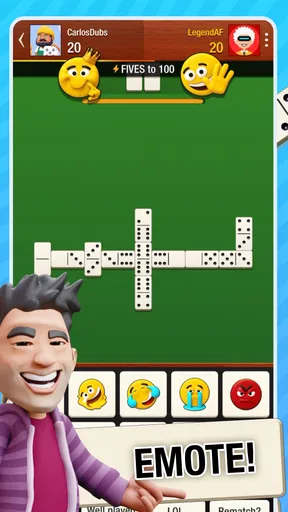
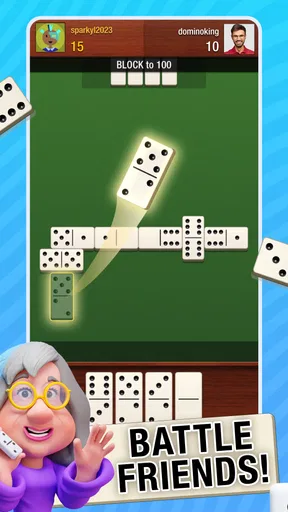

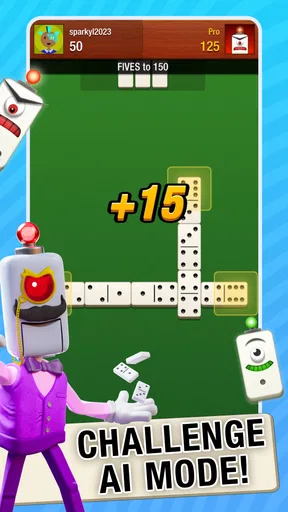


Our Review of Domino! Multiplayer Dominoes
 Analysis by Appyee
I downloaded Domino! Multiplayer Dominoes expecting a simple digital version of a familiar tabletop game, and that is exactly where its appeal begins. It is a board game from Flyclops LLC, free to start, and built around the comfort of placing dominoes, reading the table, and deciding whether to play safely or take a risk. The experience feels easy to understand within a few minutes, yet a close match can still demand careful attention.
What makes it interesting to me is not just the domino format. It is the way the game brings a traditionally social activity into a phone or tablet, where I can play when a physical set is unavailable. That convenience also creates questions about readability, touch control, concentration, and whether the game fits a particular player’s needs. My experience is positive overall, but I would not recommend it blindly to everyone. The best choice depends on how comfortably you can follow a busy game board and how much you enjoy competitive online play.
How comfortably the game communicates the board
The first thing I noticed was how quickly the central rule becomes visible: match the ends of the dominoes already on the table. That clarity matters because a board game can become frustrating when the interface makes the legal move difficult to recognize. Here, the basic visual language is familiar, so someone who already knows dominoes can concentrate on strategy rather than learning a complicated menu system.
Navigation is also helped by the narrow purpose of the app. This is not a crowded collection of unrelated mini-games. The focus stays on domino play, which makes it easier to return to after a break. I appreciate that kind of restraint. A player who wants to spend a few minutes making moves does not need to understand a large system before getting started.
At the same time, dominoes are a visual game. I need to distinguish the pips on each tile, follow the open ends, and keep track of what has already been played. On a small phone, that can require more concentration than it would on a real table. The issue is not the rules; it is the amount of information compressed into a limited screen. A tablet is a more comfortable choice for anyone who finds small symbols tiring to inspect.
My practical advice is to play the first few rounds in a quiet setting rather than judging the game during a rushed commute. The board is easier to understand when I am not dividing attention between the app and everything happening around me. If you are helping a less experienced player, explaining the matching rule before a competitive session also removes much of the initial pressure.
The game has a broad audience in numerical terms, with a 4.7 average from around 139 thousand ratings and more than five million installs. Those figures suggest that the basic presentation works for many people, but they do not remove the need to judge the interface personally. A strong rating cannot guarantee that every player will find small domino markings equally comfortable.
Learning the rhythm without feeling overwhelmed
Dominoes can look slower than many mobile games, but the decisions are meaningful. I have to consider whether to use a tile immediately, preserve a useful number for later, or avoid giving an opponent an easy continuation. That rhythm gives the game a calmer quality than fast arcade titles. It can suit players who prefer thinking time over rapid reactions.
There is also a useful social balance here. I do not need to gather people around a physical table before I can enjoy a match. For someone who likes the idea of playing with others but has difficulty arranging a shared time and place, a mobile version lowers that practical barrier. The trade-off is that digital play can feel less personal than sitting across from friends and handling real tiles.
New players should resist the temptation to treat every move as equally important. Early in a round, I find it more useful to observe which numbers keep appearing and which options may be disappearing from play. That habit makes the board easier to read because I am no longer looking only at my own hand. I am building a simple picture of the game’s direction.
Touch control, attention, and different ways of playing
Domino! Multiplayer Dominoes does not demand the reflexes of a racing game or a platformer. The main action is selecting and placing a tile, so the physical workload is relatively light. That makes it approachable for players who prefer deliberate interactions. A person who finds rapid tapping uncomfortable may appreciate the slower decision-making, although accurate selection still matters when several tiles are close together.
The game is less suitable for someone who needs very large visual targets or has significant difficulty distinguishing small pip patterns. Dominoes depend on recognizing numbers quickly, and that remains central even when the rules are simple. I would test it on the intended device before committing to long sessions, especially if the player normally uses a larger display for reading or games.
Sensory comfort is another consideration. Competitive play can encourage me to keep checking the screen and reacting to the flow of a match. For some players, that concentration is enjoyable; for others, it becomes tiring. Short sessions work well for me because they preserve the pleasant, thoughtful character of dominoes without turning the game into a prolonged visual task.
A useful approach is to adjust the environment rather than forcing the app into an unsuitable one. I play with the screen at a comfortable distance, avoid glare, and pause between rounds when my attention starts to fade. These are simple habits, but they make a noticeable difference in a game where reading the board is more important than speed.
The Everyone content rating makes the game broadly appropriate from an age-classification perspective. That does not mean every child will understand competitive domino strategy immediately, or that every adult will find the display comfortable. Younger players may still benefit from an adult explaining turn order and basic tactics, while older players may prefer a larger screen and shorter sessions.
When online competition helps and when it gets in the way
The multiplayer focus is the central reason to choose this game instead of a solitary puzzle. I enjoy the feeling that a move has consequences for another person rather than only for an automated challenge. It gives familiar domino rules a stronger sense of occasion, especially when I play with someone I already know.
That same focus can be a barrier in situations where my connection, attention, or available time is unreliable. A match is not ideal when I may need to put the phone down without warning. It is better suited to a planned break, a relaxed evening, or a moment when I can give the round my full attention. A traditional physical set may be more forgiving if players want to stop and resume naturally around a table.
For friends or family members with different experience levels, I recommend agreeing on the tone before starting. One player may want serious competition while another simply wants a friendly way to talk and play. The app can provide the setting, but it cannot automatically solve that difference in expectations. In my view, the social quality depends as much on the people involved as on the digital board.
There is also a useful everyday scenario for this format: I can play a quick round during a quiet waiting period without carrying a box of dominoes. That is a real advantage over physical alternatives. On the other hand, if I am sitting with a group in the same room, a real set often creates better conversation because everyone can see the pieces and share the same physical space.
What the free model means in everyday use
The game is free to download, which makes trying it straightforward. There are in-app purchases ranging from $0.99 to $99.99 per item, so I would approach the purchase system with awareness rather than assuming that every part of the experience is included without optional spending. For me, the sensible test is simple: play enough to decide whether the core domino experience is enjoyable before buying anything.
This matters particularly for families. If a child uses the device, I would set clear expectations about purchases before handing it over. The game’s Everyone rating describes its age category, but it does not replace ordinary supervision around spending or screen time. Adults who dislike in-app purchase prompts may prefer a physical domino set, where the cost is visible at the beginning and there is no digital store element during play.
The current version is 102.4.0 and requires Android 8.0 or later. That gives the app a clear practical boundary: anyone using an older Android device should check compatibility before planning around it. Players on supported devices should still consider storage, battery condition, and screen size as everyday factors, because a board game is only convenient when the phone is comfortable to use.
The release date, Dec 14, 2013, also gives the app a long history compared with many newer mobile games. I see that as a sign that the concept has had time to find an audience, but it also means the experience is best judged by what I want from dominoes rather than by expecting the newest visual style. If polished spectacle is the priority, a more modern board-game adaptation may feel more exciting. If familiar play is the priority, the established format is a strength.
Small strategic habits that improve the experience
My first useful habit is to stop treating a playable tile as automatically good. Matching immediately may keep the turn moving, but it can also remove a valuable option from my hand. I try to consider what numbers I may need later, especially when the table begins to narrow my choices.
Second, I pay attention to the numbers that opponents appear willing or unwilling to play. This is not perfect information, but it gives me a reason to look beyond my own tiles. If a particular end repeatedly causes hesitation, I treat that as a clue and avoid making assumptions based only on the most obvious move.
Third, I separate interface difficulty from game difficulty. When I lose, I ask whether the mistake came from strategy or from failing to read the board comfortably. That distinction is valuable for players with visual or attention-related challenges. If the problem is the display, a larger device or a better-lit position may help more than studying advanced tactics.
Finally, I keep sessions purposeful. One or two focused rounds are more enjoyable for me than continuing after concentration has dropped. This is especially useful for players who experience fatigue, headaches, or difficulty maintaining attention. The game’s turn-based nature makes it naturally calmer than many mobile genres, but calm does not mean effortless.
Where the experience still has limits
The biggest limitation is that a digital domino table cannot adapt itself to every player in the way a patient human host can. In person, I can enlarge the playing area, rearrange tiles, explain a rule, or pause the game immediately. On a phone, I am working within the screen and interaction style the app provides. That makes device choice unusually important for an apparently simple board game.
Another limitation is the dependence on visual attention. Players who can comfortably scan symbols and remember the changing ends of the board will find the game approachable. Players who need strong nonvisual cues, very large markings, or a slower shared pace may find a physical set with supportive companions more accommodating. I would not choose this app as the only option for someone whose main requirement is extensive accessibility customization.
Multiplayer can also create pressure. A thoughtful player may enjoy the competition, while someone who needs frequent pauses may feel rushed or distracted. The app is a better fit for people who can give a match a reasonably continuous block of attention. If flexibility is more important than competition, a solo tabletop arrangement or a casual offline alternative may be a better match.
There is a social limitation too. Playing through a screen removes some of the warmth of passing tiles, reading facial expressions, and sharing a laugh after an unlucky draw. I still find online play useful, especially when distance prevents a physical game, but I would not claim that it fully replaces sitting with friends around a table.
People who dislike optional purchases should also think carefully before installing. The free entry is helpful, but the presence of purchase items means the app is not as straightforward as buying a boxed game once. My recommendation is to treat spending as optional and deliberate, not as part of the basic reason to download it.
My inclusive verdict on this domino community
I recommend Domino! Multiplayer Dominoes to players who want familiar board-game rules, measured decision-making, and the convenience of playing through a mobile device. It is especially appealing when I want a social match without arranging a physical table, and it works well for people who prefer strategy over fast reactions.
I would be more cautious for anyone who struggles with small visual details, needs frequent interruptions, or expects extensive control over presentation and interaction. A larger screen can improve comfort, and a real domino set may be the better choice when physical accessibility, shared conversation, or complete control over pacing matters most.
Flyclops LLC has kept the central idea easy to approach, while the large player base shows that this straightforward format has lasting appeal. The game is free to begin, rated Everyone, and supported on Android devices running version 8.0 or later. Those practical details make trying it easy, but the real decision comes down to whether your eyes, hands, attention, and preferred social setting suit a digital domino table.
My final view is positive but specific: this is not merely a substitute for a box of tiles, nor is it the perfect answer for every ability or context. It is a convenient multiplayer board game that rewards patience and observation. If you can read the board comfortably and have time to focus, I think it is worth trying. If you need a highly adaptable interface or a relaxed game that can stop at any moment, I would choose a physical alternative or a different style of digital board game instead.
Verdict
Strengths of Domino! Multiplayer Dominoes
- Smooth online multiplayer matches with players worldwide.
- Multiple domino rule sets offer variety beyond classic games.
- Quick matchmaking makes it easy to start a game.
- Simple controls are suitable for beginners and casual players.
- Progression and rewards add motivation to keep playing.
Limitations of Domino! Multiplayer Dominoes
- A stable internet connection is required for online matches.
- Random matchmaking can pair beginners with highly experienced players.
- Ads may interrupt the experience, especially for free users.
- Some features and rewards may depend on in-app purchases.
- Connection issues can affect match results or cause forfeits.
Similar Picks in This Category
View All
Ludo King®
Gametion4.1

Ludo
Yarsa Games4.6

Tile Master® - Matching Game
Higgs Studio3.6

Checkers Online
CC Games4.6

Dominoes
Loop Games4.7

Chess
Chess Prince4.6
Frequently Asked Questions
What is Domino! Multiplayer Dominoes?
Domino! Multiplayer Dominoes is a digital version of the classic domino game designed for online and local-style matches. After installing it, players can usually choose from different game modes, compete against other users, and practice their strategy in shorter or longer rounds. The app focuses on accessible rules, quick matchmaking, and a social multiplayer experience suitable for both beginners and experienced domino players.
Can I play Domino! Multiplayer Dominoes with friends?
Yes, the main appeal of Domino! Multiplayer Dominoes is its multiplayer experience. Depending on the available options in your version, you may be able to invite friends, join private rooms, or challenge players through online matchmaking. Before downloading, remember that multiplayer features generally require an internet connection, and some modes or invitations may depend on account settings, supported platforms, or the current version of the game.
Does Domino! Multiplayer Dominoes require an internet connection?
An internet connection is normally needed for online matches, matchmaking, leaderboards, and other social features. The availability of offline play can vary by device and game version, so it is worth checking the mode selection after installation. If offline practice is supported, it may allow you to play against computer opponents, but it will not provide the same real-time interaction as an online match.
Is Domino! Multiplayer Dominoes free to download and play?
Domino! Multiplayer Dominoes may be available as a free download, but users should review the store listing carefully because free games can include advertisements, optional purchases, or premium features. In-app purchases might offer cosmetic items, extra benefits, or other enhancements, depending on the edition. We recommend checking the pricing details, permissions, and subscription information before confirming a purchase or allowing children to play.
Is Domino! Multiplayer Dominoes suitable for beginners?
Yes, the game can be a good starting point for people who are unfamiliar with digital dominoes, especially if they begin with practice matches or simpler game modes. The basic objective is easy to understand, while stronger play requires planning, memory, and awareness of the tiles already used. New players should take time to learn the scoring rules and match format, since these may differ from traditional house rules.
Play our best games!


